Cottagecore Edit
Our pick of the most cottagecore designs at Morris & Co.

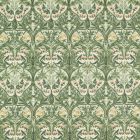
When we think of cottagecore, we think of a bucolic English countryside, fields in the distance, picking fruits, flowers, maybe a weeping willow swaying in the wind. But how did we get there?
William Morris, and all the designers at Morris & Co. May Morris, John Henry Dearle, were so deeply informed by the movements of nature, that in some way, their designs contribute to how we conceptualise ‘cottagecore’ as a contemporary audience.
In his writings, William Morris clearly felt that humans desperately needed a connection to nature to live a truly human life, and his designs for the home of the Victorian age, were a way of keeping our relationship with nature alive.
Here are three Morris & Co. designs that evoke the essence of cottagecore.
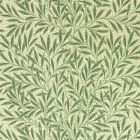
Willow Boughs
Many of Morris's designs were based on plant forms which he studied first hand. Some of his patterns, such as Trellis and Garden Tulip were drawn from plants in his own gardens. But with Willow Boughs, we know from May Morris’ writing, we know it was inspired by a Weeping Willow seen on a walk with his daughter.
'We were walking one day by our little stream that runs into the Thames’ May Morris writes, ‘and my Father pointed out details and variety in the leaf forms and soon afterwards this paper was done, a keenly observed rendering of our willows'.


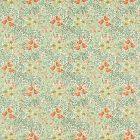
Marigold
What makes William Morris so distinctive at the time, was his love of the ordinary, common English flower you would find in the garden. Think, tulips, larkspur (delphinium), iris, bluebell, columbine, honeysuckle, roses and thistles.
Marigold is no different. Here, in these happy sprays of Marigold, with a willow leaf sweep across this design; a design that exudes the love of studying and drawing from the ‘humble’ garden flower.


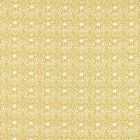
Honeysuckle
Unruly woody stems of the honeysuckle play host to a happy tangle of blooms and curling leaves in this intricate, intertwining 1883 Honeysuckle design by May Morris. There’s something too about it being a climbing plant, and how we so often see it climbing, or hanging off walls. As a wallpaper it feels as if the honeysuckle designs were growing along the walls in your home.


